In marketing, we prefer the imperative mood: buy now, learn more, contact us. We’re confident but not forceful, proud but not boastful. The interrogative mood – asking a question – might be used to set the scene, but uncertainty can feel like sabotage when there’s a product or service to sell.
Privately, we can learn a lot and accomplish even more by asking the right questions during marketing campaign planning. In financial services especially, it helps to stay curious about our account holders, community, and industry so our campaigns hit a little closer to home.
Here are six revealing questions to ask before launching your next campaign.
Key Takeaways
What Are We Actually Trying to Accomplish
Every marketing campaign begins with an objective, but how clearly have you defined yours? Increasing awareness, acquiring new account holders, and encouraging product adoption are all worthwhile marketing campaign goals. But each represents a different measure of success.
Consider what you want your audience to know, feel, or do after receiving your communications. Defining your objectives before launch gives your team a common understanding of what you’re working toward. It also provides a useful reference point when evaluating your results.
Some common campaign goals in financial services may include:
How Well Do We Really Know Our Audience?
In the financial services industry, especially at community banks and credit unions, it can be all too tempting to let your gut dictate how you target. You’re obviously familiar with the people you serve – where they work, what they do on weekends, even the name of their dog. But is that familiarity strong enough foundation for a campaign with potentially 14,000 targets?
Beyond basic demographics, account holders have different financial needs, product relationships, and levels of engagement with your institution. Fortunately, much of this information may already exist within your core banking system.

Account balances, transaction activity, product holdings, and relationship tenure can provide valuable insights into the people you’re trying to reach. Consider whether your current marketing efforts reflect these audience segments.
Consider asking yourself:
Are We Communicating With Purpose or Simply Following a Schedule
Consistency is important in financial services marketing. Regular communications keep your institution top of mind. But when was the last time you questioned the reasoning behind your marketing calendar?
Annual campaigns, seasonal promotions, and recurring communications can become routine. While there’s nothing inherently wrong with repetition, it’s worth considering whether these activities continue to serve your institution’s marketing campaign goals.
That’s especially true of each touchpoint throughout a campaign. Does this campaign need three emails spaced two weeks apart? Or will one carefully structured email followed with a postcard do the trick?
Before adding another campaign or touchpoint, ask yourself:
Are We Reaching People at the Right Moments?
Even the most compelling marketing message can fall flat when delivered at the wrong time. Financial needs change throughout an account holder’s life, and communications that seem irrelevant today might become valuable tomorrow.
Consider the many occasions that might influence someone’s interest in your products and services. Opening a new account, approaching a CD maturity date, or reaching a significant relationship milestone could each present opportunities for meaningful engagement.
Of course, identifying these moments is only half the challenge. Reaching account holders when those moments occur requires coordination, data, and sometimes marketing automation.
As you evaluate your marketing communication strategy, consider whether your current approach accounts for these opportunities or relies primarily on predetermined campaign schedules.

Do We Have the Resources to Follow Through?
Ambition is admirable, but even the most promising marketing campaign can falter without the resources to see it through. For smaller marketing departments – or departments of one – balancing campaign execution with everyday responsibilities can be particularly challenging.
Before committing to your next initiative, consider the time, personnel, and technology required to bring it to life. Can your team manage the creative development, audience selection, distribution, and follow-up? Are there existing tools or processes that could simplify some of these responsibilities?
Marketing automation, campaign scheduling, and reusable templates may reduce repetitive work, leaving more time for other priorities. Ultimately, understanding your team’s capabilities and limitations can help you establish realistic expectations for what your next campaign might accomplish.
What Have Our Previous Campaigns Taught Us?
Every marketing campaign is an opportunity to learn something about your audience, messaging, and approach to communication. But how often do you revisit those lessons before planning your next initiative? Campaign performance data, including email open rates and click-through rates, can reveal valuable patterns in account holder engagement.
Even campaigns that fall short of expectations can offer insights worth exploring. Consider whether your team regularly reviews campaign results and discusses what those findings might mean for future communications. Are you applying lessons from previous efforts, or approaching each new campaign with a clean slate?

Ask Better Questions, Launch Stronger Campaigns
Status quo campaigns produce status quo results. While challenging familiar assumptions isn’t always easy, doing so can reveal opportunities for improvement. At a minimum, asking even one of these questions can sharpen your strategy – both for the next campaign and for those to come.
Finally, by asking the right questions, you can strengthen your argument for additional tools or resources. If you frequently notice dead ends or blind spots during marketing campaign planning, you can take those concerns to leadership in the knowledge that you’ve done your due diligence. At the end of the day, a simple question mark can make all the difference.
Put Your Marketing Plans Into Action With Connect by Main Street™
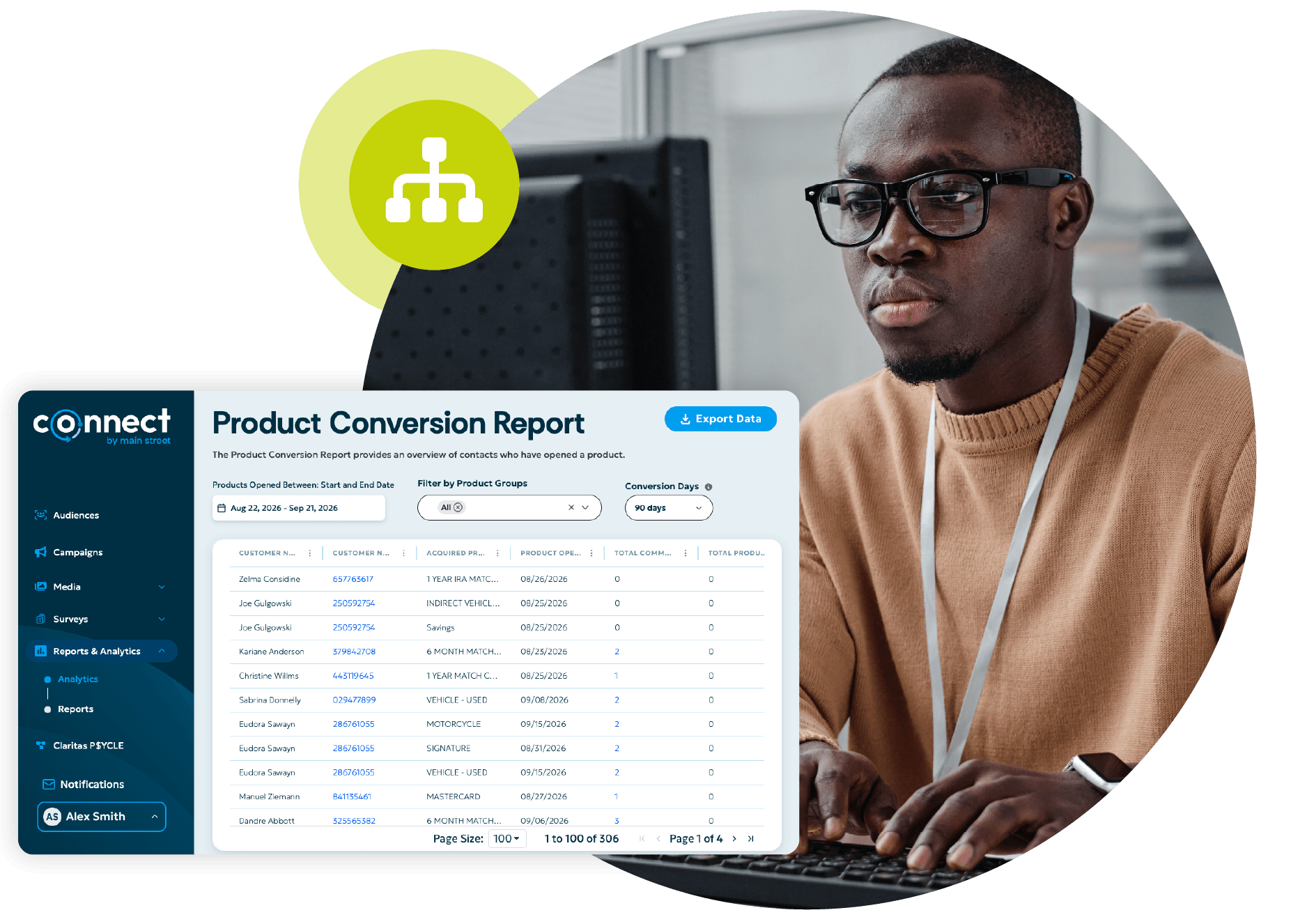
Turn your answers into action with Connect by Main Street™. Use your institution’s core data to identify target audiences, create personalized email and direct mail campaigns, automate communications, and evaluate campaign performance. Discover how Connect can support your next campaign.