We all have skin in the marketing game – as consumers, professionals, or both. But involvement doesn’t translate to engagement, especially in the digital marketing age when we receive more promotional messages than ever before.
Overexposure can lead to marketing fatigue – a serious concern for community financial institutions. But an unlikely hero rises to help us reach customers with surprising results: direct mail marketing.
Key Takeaways
What is Direct Mail Marketing? – Main Street Explores
Those of us of a certain age remember physical advertisements arriving in our mailboxes – a wild concept, we know!
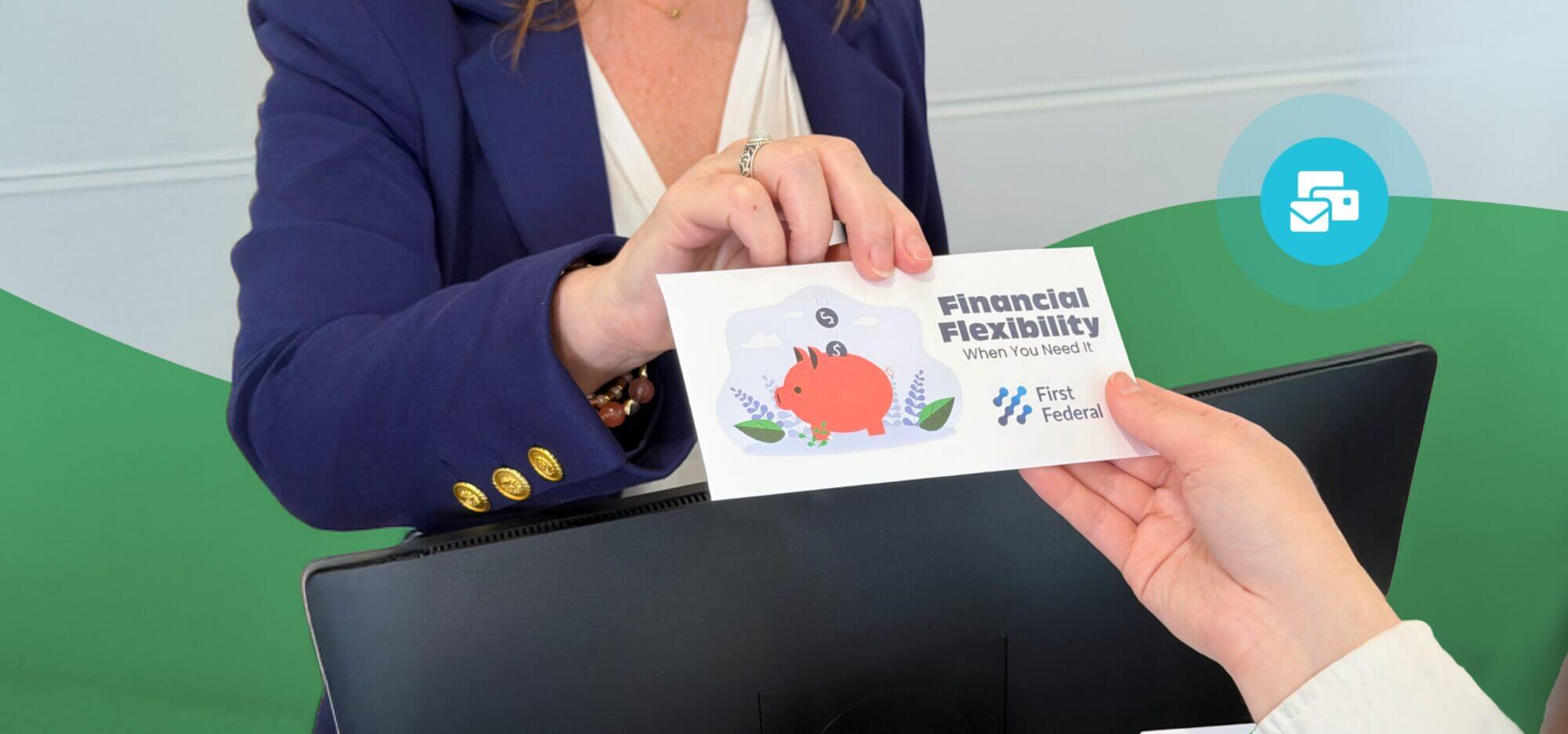
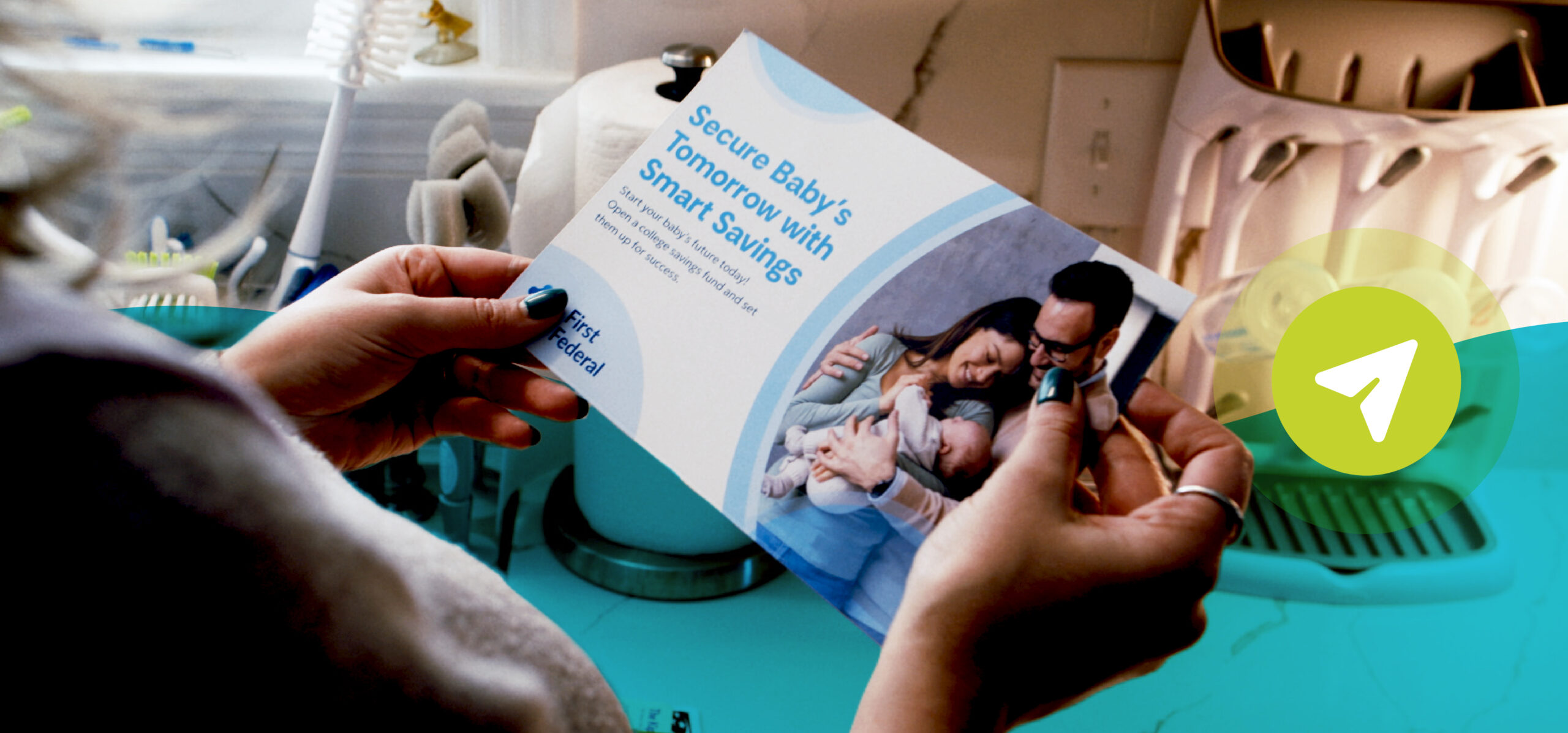
Direct mail marketing (or print marketing) is just that. Only these days, we use data to determine the most receptive audience and even personalize our messaging before bringing ink and paper into the mix.
Direct mail takes many forms, including letters and postcards. Regardless of format, print marketing shares one crucial advantage: it has to be pulled from a mailbox and acknowledged, unlike so many emails or social media posts.
How Effective is Direct Mail Marketing Anyway?
Every marketing channel has a role to play in creating comprehensive brand identity and awareness. But the effectiveness of each channel (social, email, paid ads) ebbs and flows with the times.
To determine which channel works best for this message or that campaign, we can turn to response rates. A response rate is defined as a percentage of people who take a specific action within a campaign.
We can see that direct mail marketing has a higher response rate than email on average. That’s likely down to the sheer volume of marketing messages we receive digitally each day.
But print’s higher response rate doesn’t make it the best channel, only the right channel for certain messages or audiences.
Direct Mail Marketing for Banks and Credit Unions – Top Applications for 2026
So, when should you incorporate print? How can you develop a direct mail marketing strategy of your own in 2026? It’s less about the product or service you’re selling and more about who you’re trying to reach and why. Let’s dive in.
Tip 1: Use Print When Reaching Older or Financially Conservative Audiences
Account holders who prefer clear, reliable communication respond well to print. Many feel more comfortable with physical mail than digital messages, which can seem fleeting or untrustworthy in an age of phishing attempts and data hacks.
A printed piece signals care and credibility, making it easier to capture attention and build confidence with individuals who are cautious about online outreach.

Tip 2: Use Print When Promoting In-Person or Educational Events
Evites (electronic invitations) may be in vogue these days, but nothing says “we humbly request the presence of your company” quite like an ink-and-paper invitation.
Here, print conveys importance and credibility in ways that digital messages often can’t, encouraging recipients to take action and attend events in a crowded marketing landscape. That’s especially true if your financial institution hosts:
Tip 3: Use Print When Your Message Needs Guaranteed Visibility
Throughout the course of the year, some products and services receive top billing. For these campaigns, a full-court press using every available channel ensures higher engagement across the board.
Print ensures your message is seen, even when inboxes are crowded or emails go unread. A physical piece commands attention and reduces the risk of your communication being ignored or overlooked.

Tip 4: Use Print When Targeting Specific Segments with High-Value Products
Print conveys a sense of exclusivity and intentionality, making recipients feel the offer is carefully tailored to them rather than part of a mass campaign. This tactile approach reinforces the perceived value of the product or service and signals that you understand a customer’s needs.
For high-value campaigns, a physical piece stands out and gives recipients time to consider an offer at their own pace. It also creates an opportunity to combine personalization with premium design elements – high-quality paper, embossed details, or strategic messaging – all of which strengthen credibility and trust.
Tip 5: Use Print When Reinforcing Multi-Channel Campaigns
An email is easy to delete, and a social media post is easy to scroll right past. While each channel maximizes outreach, they’re also easily ignored.
Print reinforces messages delivered digitally, ensuring your offer isn’t lost in crowded inboxes or feeds. A well-timed postcard or letter keeps the campaign top-of-mind, increases engagement, and signals that the message is important enough to warrant multiple touchpoints.

Use Direct Mail in Your 2026 Campaigns for Boosted Engagement
Print and marketing are an established pair with modern benefits. As part of a leading-edge multi-channel campaign, or as a communication in its own right, a personalized postcard sent to a segmented audience can compel attention in a digital age. Try it out for yourself during the 2026 marketing season!
Main Street is Your All-in-One Check and Custom Print Vendor
From branded checks and envelopes to marketing materials and postcards, Main Street is your single source for high-value print. Keep an eye out for direct mail marketing services through Connect by Main Street in 2026!
Sources:
Wrinn, Corey. “Consumers Are Suffering from Marketing Fatigue: Here’s How to Earn Back Their Attention.” The Financial Brand. Accessed November 18, 2025. https://thefinancialbrand.com/news/bank-marketing/consumers-are-suffering-from-marketing-fatigue-heres-how-to-earn-back-their-attention-190942
Symon, Nicole. “Email Click‑Through Rate.” Constant Contact Blog. Accessed November 18, 2025. https://www.constantcontact.com/blog/email-click-through-rate
American Marketing Association. “Direct-Mail Campaigns Aren’t Dead: 7 Ways to Boost Responses and Save Money.” AMA. October 13, 2022. https://www.ama.org/2022/10/13/direct-mail-campaigns-arent-dead-7-ways-to-boost-responses-and-save-money